Plantar Pressure Assessment Canberra
How We Actually See Your Feet Working — And Why a Pressure Plate Changes Everything
Most people have never actually seen how their feet load the ground.
And honestly, most assessments don’t really show it either.
Usually it’s:
“Walk over there… okay… looks alright.”
Which is a bit like diagnosing a car engine while the bonnet stays closed and someone’s blasting the radio.
You might catch the obvious stuff…
…but you miss the real story.
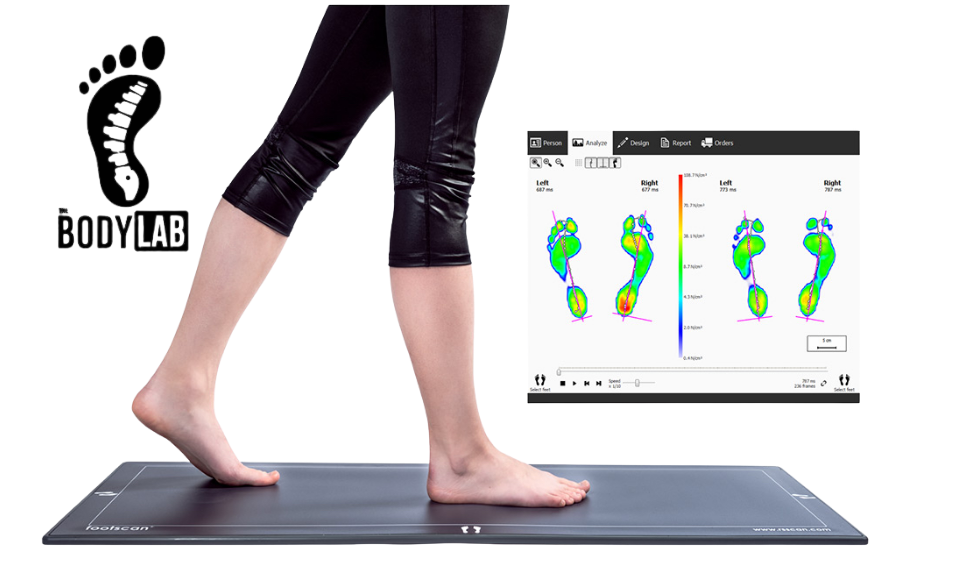
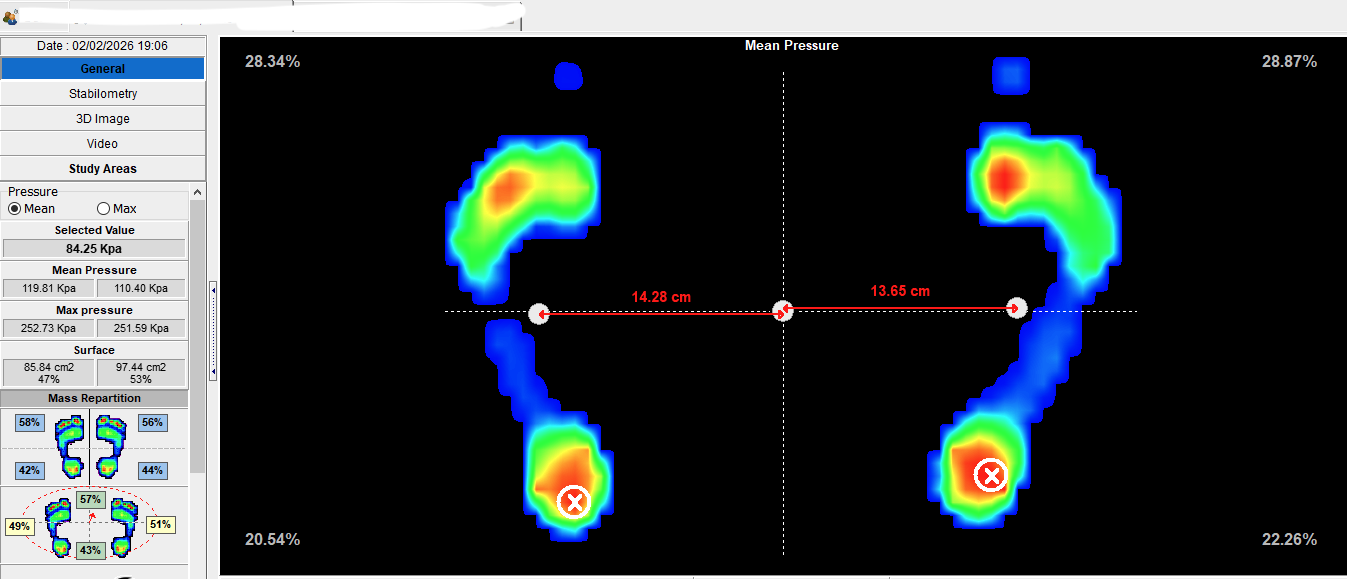
At The Body Lab, plantar pressure plate technology allows us to see:
how your feet actually interact with the ground during standing and walking.
Because your feet don’t just hold you up.
They:
absorb force
transfer weight
adapt to movement
balance the body
and help propel you forward
When this process changes, the rest of the body often compensates.
What Is a Plantar Pressure Assessment?
A plantar pressure plate is a high-resolution sensor system that maps how your feet load the ground.
Rather than simply looking at foot shape, it allows us to assess:
pressure distribution
weight transfer
balance strategies
centre of mass positioning
loading asymmetries
movement pathways
push-off patterns
In simple terms:
it helps us see how your body manages force.
Because often the issue is not strength alone.
It’s how the body is accepting and transferring load during movement.
Why This Matters
Pain is often a loading problem.
Your plantar fascia usually isn’t randomly “angry.”
Your knee isn’t trying to ruin your weekend for entertainment purposes.
And your calf probably isn’t tight just because it enjoys attention.
Often the body is simply:
managing force inefficiently.
If one part of the foot avoids load, another area usually works harder.
That compensation can gradually build into:
heel pain
plantar fasciitis
Achilles tension
bunions
knee pain
hip tightness
lower back stiffness
balance changes
The pressure plate helps us identify:
where your body prefers to place force — and where it avoids it.
What We’re Actually Looking For
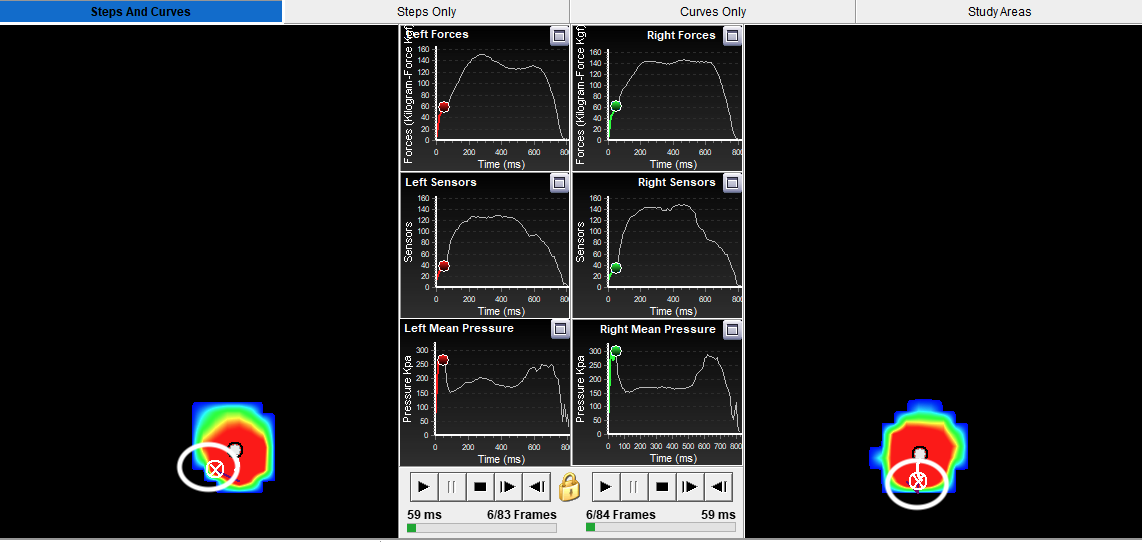
Heel Loading
Does your heel accept load properly during walking?
Or does the body avoid that phase completely?
If the heel doesn’t load efficiently, the rest of the body often compensates higher up the chain.
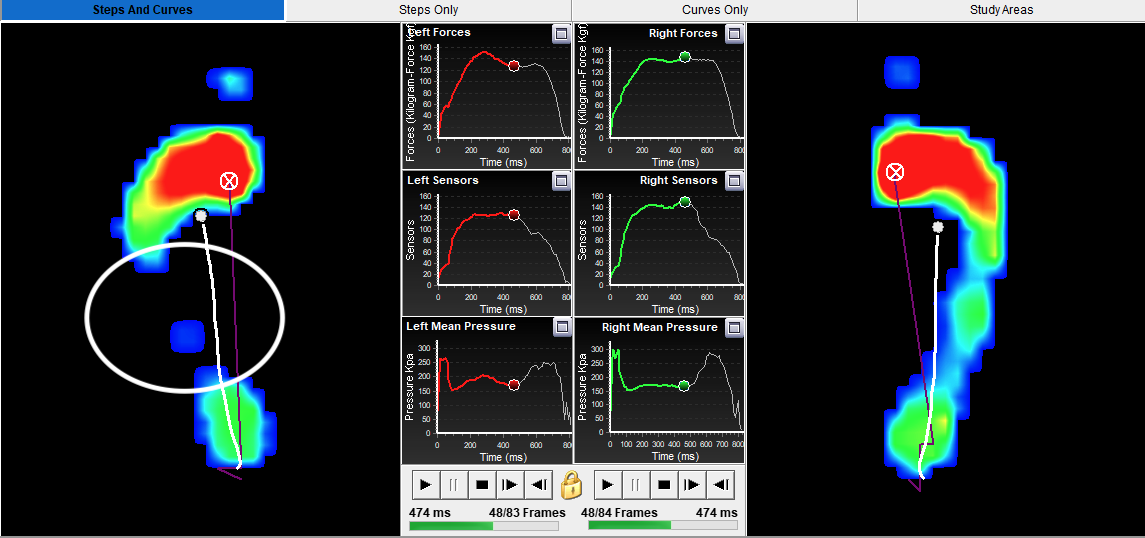
Arch Loading & Midfoot Motion
Pronation is not the enemy.
Your foot needs to adapt and absorb load.
We assess:
how the arch responds to pressure
whether force spreads through the foot properly
or whether load dumps into one area repeatedly
Without this adaptability, the foot often becomes:
stiff instead of responsive.
Push-Off & Big Toe Function
This is where many people lose efficiency.
We assess:
big toe loading
push-off mechanics
lateral-to-medial weight transfer
propulsion patterns
If this phase is missing, the body often leaks energy every step.
This commonly shows up as:
tight calves
recurring heel pain
Achilles overload
poor walking efficiency
fatigue during movement
Static vs Dynamic Assessment
Standing still and walking are two very different things.
Many people stand one way…
…and move completely differently.
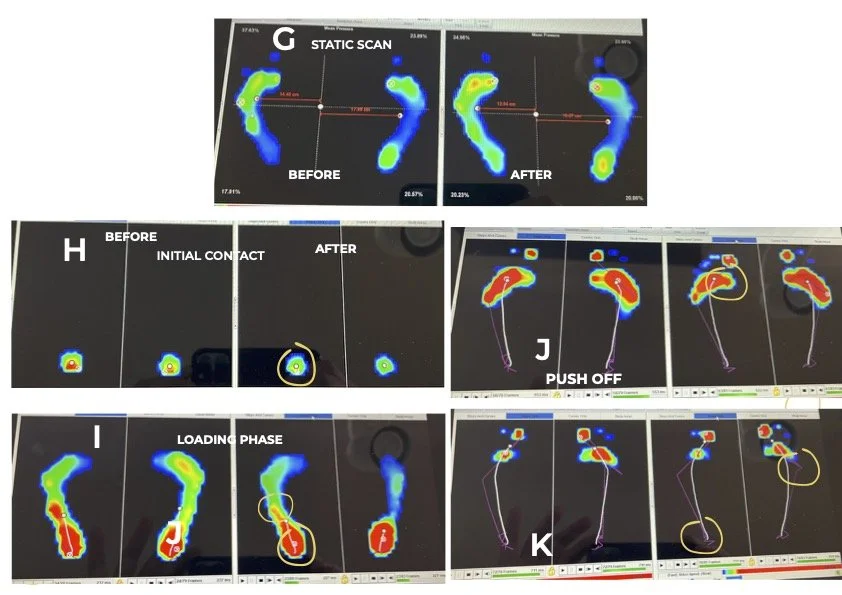
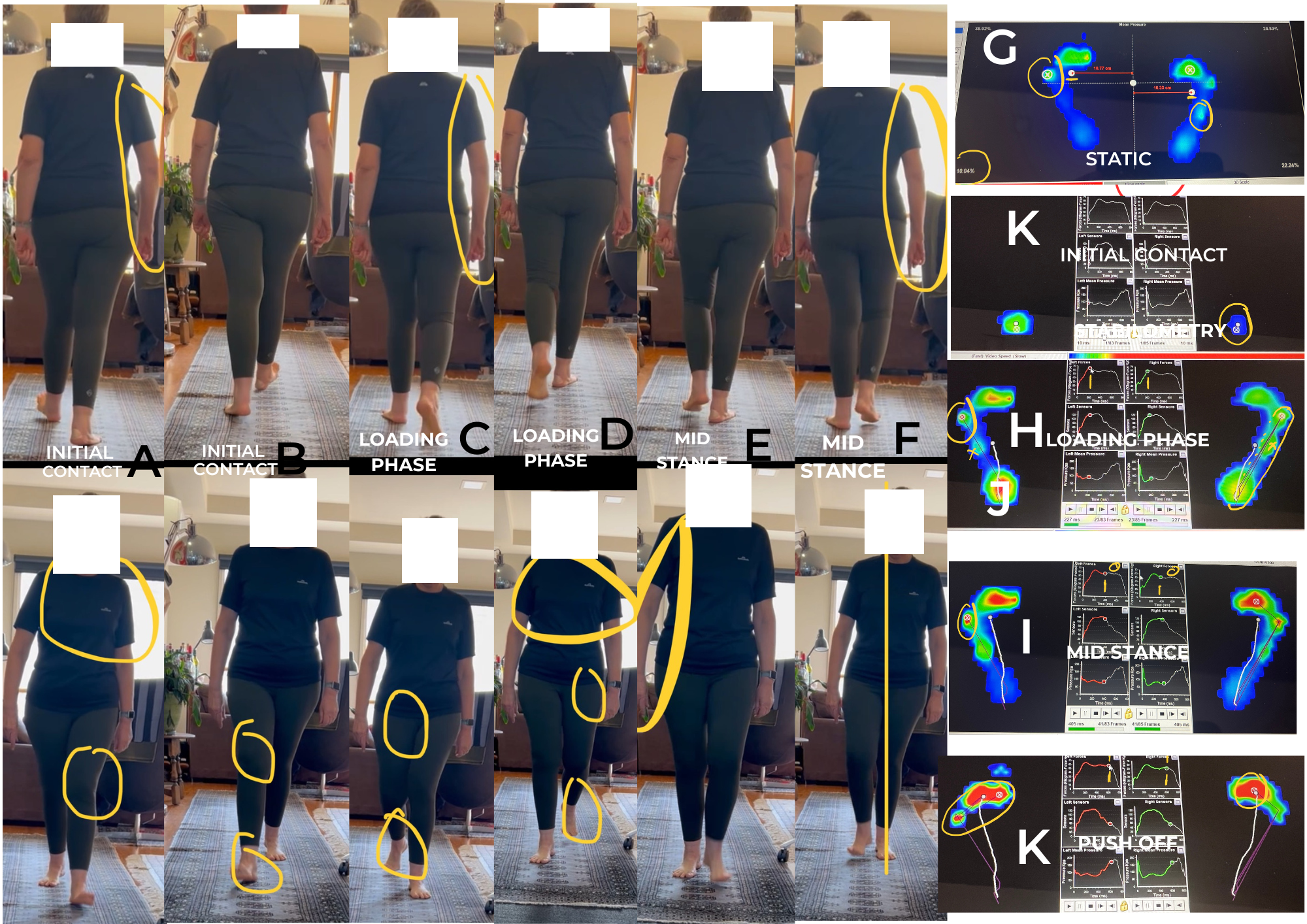
The pressure plate allows us to compare:
static posture
dynamic movement
balance strategies during walking
real-time force transfer
Because pain rarely appears while standing perfectly still like a department store mannequin.
The real story usually shows up during movement.
Why Most Clinics Don’t Assess This Way
Most practitioners assess:
posture visually
isolated pain areas
muscles and tightness
Few clinics combine:
pressure plate technology
gait analysis
movement assessment
foot mechanics
walking analysis
into one integrated system.
At The Body Lab, the pressure plate is not used as a gimmick or fancy screen saver.
It’s used to help understand:
how your body is actually managing force during movement.
Because once we can see the loading strategy, treatment becomes far more specific.
How This Fits Into Your Assessment
The pressure plate is combined with:
gait analysis
movement assessment
posture assessment
foot function testing
hands-on assessment
movement retraining
This means your treatment plan is based on:
your actual movement pattern.
Not generic exercises pulled from the internet by someone doing banded crab walks in a warehouse gym.
What Clients Often Notice
Many people are surprised to discover:
they stand heavier on one side
they barely load one heel
their big toe doesn’t push properly
their balance strategy changed years ago
one foot works significantly harder than the other
Common responses include:
“That explains why my calf is always tight.”
“I didn’t realise I wasn’t using my big toe.”
“I can actually feel the difference when I walk now.”
That’s the goal.
Not just understanding movement —
but changing how you move.
Who Is This Assessment Helpful For?
A plantar pressure assessment may be useful for:
heel pain
plantar fasciitis
bunions
Achilles pain
knee pain
hip tightness
balance issues
walking inefficiency
foot fatigue
sports injuries
recurring lower limb tension
It’s especially useful for people who:
“feel like something about their walking just doesn’t feel right anymore.”
Book Your Plantar Pressure Assessment Canberra
If you don’t understand how your foot loads the ground, you’re often guessing your way through treatment.
And guessing works…
Right up until it doesn’t.
Book your Plantar Pressure & Gait Assessment at The Body Lab and start understanding how your body actually moves.