Gait Analysis Canberra
The way you walk affects the entire body.
Walking is one of the most repetitive movements humans do.
Thousands of steps a day.
Millions over a lifetime.
Small movement inefficiencies repeated over and over again can create surprisingly large compensation patterns throughout the body.
Most people never think about how they walk — until something starts hurting.
A stiff hip.
A tight calf.
A cranky knee.
A lower back that complains every afternoon like it’s filing workplace grievances.
The body doesn’t simply move with muscles.
It moves through:
timing,
balance,
rotation,
weight transfer,
coordination,
and how multiple joints work together during movement.
When one area stops contributing well, another area often works harder to keep the system functioning.
Sometimes quietly.
Sometimes like a toddler with a drum kit.
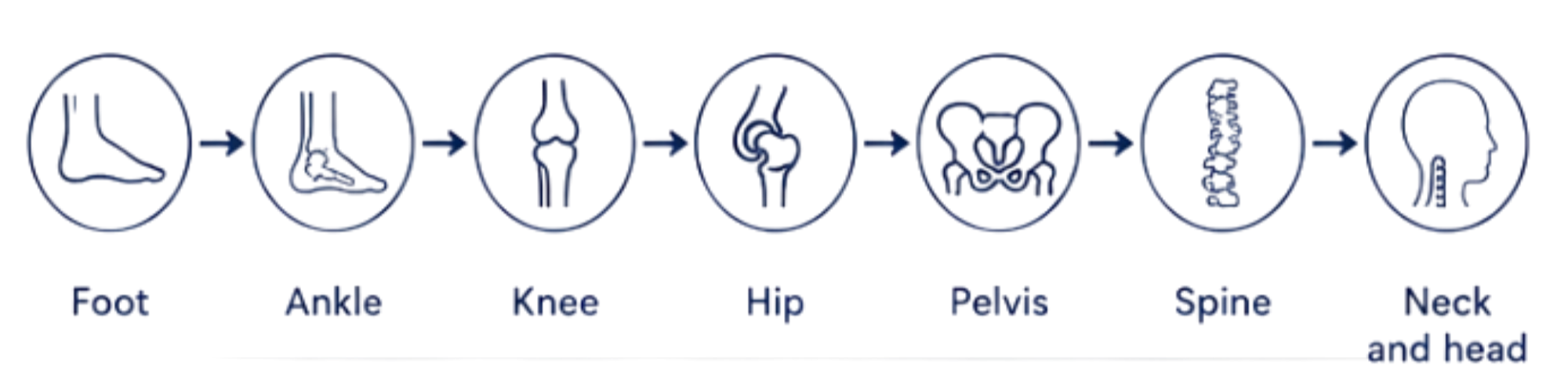
WHY GAIT MATTERS
Your walking pattern influences far more than just your feet.
Feet and ankles
Load absorption, balance, foot stability, and force transfer into the body.
Knees and hips
Rotation, shock absorption, movement efficiency, and joint loading.
Pelvis and spine
Posture, spinal movement, balance, and whole-body coordination.
Breathing and tension
Breathing mechanics, nervous system tension, and muscular guarding patterns.
When walking mechanics change, the entire chain adapts.
Not because the body is broken.
Because the body is incredibly good at survival.
Even if the strategy eventually becomes inefficient.
Common signs your gait may need attention
You may benefit from gait analysis if you notice:
recurring foot pain
plantar fasciitis
tight calves that never stay loose
knee pain during walking or exercise
hip stiffness
recurring lower back pain
one side always feeling tighter
uneven shoe wear
balance issues
posture fatigue
difficulty standing for long periods
recurring running injuries
constant tension despite stretching
feeling “heavy” or uneven while walking
Sometimes people don’t feel pain while walking itself.
They simply feel like:
“My body always feels like it’s working too hard.”
That matters.
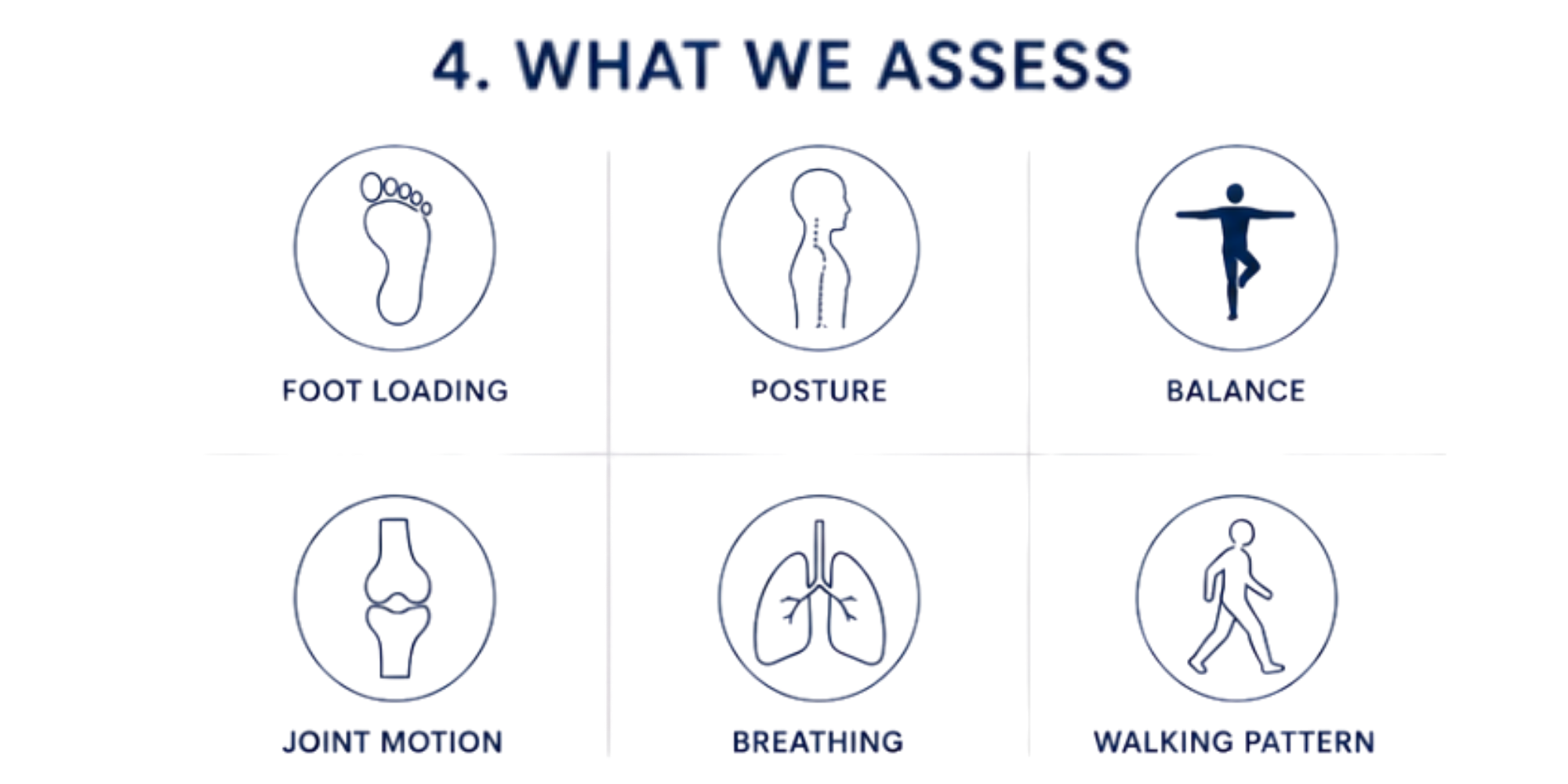
What we assess
At The Body Lab, gait analysis looks at how your body transfers load and coordinates movement during walking.
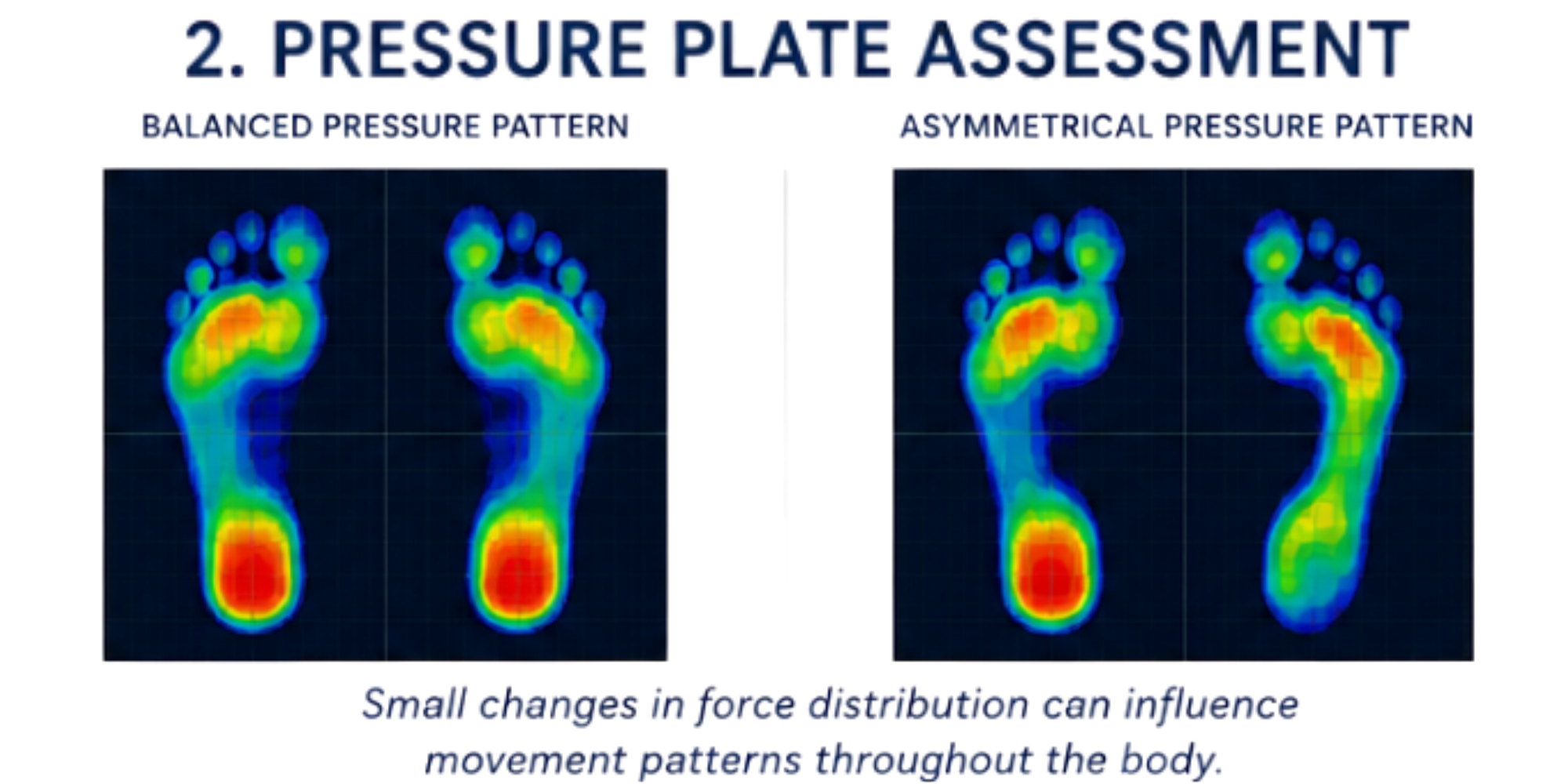
Using movement observation and pressure plate technology, we assess how force travels through the body during movement.
Assessment may include:
walking observation
pressure plate analysis
foot loading patterns
weight transfer between limbs
stride mechanics
joint sequencing
pelvic and spinal movement
posture during movement
breathing coordination
balance strategies
compensation patterns developed over time
We’re not looking for “perfect walking.”
We’re looking at how your body adapted.
Because every compensation pattern tells a story.
What people often discover
Many people arrive focused on the painful area.
But gait analysis often reveals:
old ankle injuries still influencing movement years later
collapsed foot loading patterns
instability through one side of the body
reduced hip rotation
protective walking habits
asymmetrical weight distribution
breathing and balance compensation patterns
stiffness created by lack of movement variability
posture changes driven from the feet upward
The body is incredibly loyal to old survival strategies.
Even when they stop being useful.
What a gait assessment session may include
1. Conversation
We discuss your symptoms, injury history, training background, and how your body feels day-to-day.
2. Walking observation
We observe how your body transfers load, rotates, balances, and compensates during walking.
3. Pressure plate assessment
We assess how force distributes through the feet during standing and movement.
4. Movement assessment
We explore joint mobility, posture, breathing patterns, balance, and movement coordination.
5. Treatment and retraining
Treatment may include movement retraining, mobility work, acupuncture, manual therapy, gait correction, and strength integration.
6. Home guidance
You’ll usually leave with exercises, movement strategies, or awareness drills to begin changing the pattern outside the clinic.
Most people leave understanding their body differently within the very first session.
What happens next?
Once we understand your movement patterns, treatment may include:
gait retraining
foot strengthening
mobility work
posture integration
balance training
movement sequencing
spinal mobility work
breathing integration
manual therapy
acupuncture
nervous system down-regulation
strength and coordination progressions
The goal isn’t robotic “perfect posture.”
The goal is:
more efficient movement
less compensation
better load distribution
a body that feels less like it’s fighting itself all day
Who this approach suits best
This work is often helpful for people who:
want to understand why pain keeps returning
are tired of temporary relief
feel stiff, uneven, or unstable
notice recurring injuries
are curious about movement and posture
want long-term change rather than quick fixes
are willing to actively participate in the process
want their body to feel more coordinated and less effortful
You do not need to be athletic.
You just need a body that has spent years adapting.
Which, statistically speaking, is most humans.
Your feet are not isolated from the rest of you.
Neither is your pain.
Sometimes the body has simply spent years adapting around a movement pattern that stopped working well.
Gait analysis helps us understand the story your body has been trying to tell.