Butter, Cholesterol, and the Wrong Villain
Why mainstream nutrition advice keeps missing the real lever
This week, ABC News ran a well-intentioned article asking the familiar supermarket-aisle question:
Butter, margarine or nut spreads — which is best for cholesterol and heart health?
On the surface, it sounded sensible. Balanced. Responsible. Very mainstream nutrition advice.
But beneath it sat the same reductionist framing that has dominated nutrition headlines for decades — and it quietly misses the most important part of the story.
So let’s clear the air.
This isn’t a defence of butter as a superfood.
It’s also not a declaration that cholesterol “doesn’t matter”.
It’s something far more boring, far more powerful — and far less clickable:
Butter is not the problem. Metabolic health is.
Butter isn’t magic or poison — cholesterol debates keep missing the real lever.
The first thing mainstream advice gets right
The ABC article, like most public nutrition guidance, follows a familiar chain of reasoning:
Butter is high in saturated fat
Saturated fat raises LDL cholesterol
LDL cholesterol is associated with cardiovascular disease
Therefore, butter should be limited
At face value, this appears logical.
The problem is not that this chain is entirely wrong — it’s that it is biologically incomplete.
75–80% of your cholesterol is made inside you
This part is not controversial. It’s basic lipid physiology.
Approximately 75–80% of circulating cholesterol is synthesised endogenously, primarily in the liver, with a smaller contribution from the intestines. Dietary cholesterol contributes relatively little to total circulating cholesterol in most individuals (Dietschy and Turley, 2002; Goldstein and Brown, 2015).
Blood cholesterol levels are therefore regulated largely by:
Hepatic synthesis
LDL receptor activity
Lipoprotein clearance and recycling
This is why:
Eggs were largely exonerated
Dietary cholesterol limits were softened
Cholesterol in food stopped being framed as the primary villain
So if most cholesterol is produced internally, the obvious question follows:
Why does butter keep ending up in the dock?
The confusion: cholesterol vs saturated fat
Here’s where mainstream nutrition advice consistently goes sideways.
Butter does not matter because it contains cholesterol.
Butter matters — sometimes — because it contains saturated fat.
Those two things are not physiologically equivalent.
Dietary cholesterol has relatively little impact on circulating cholesterol levels in most people. Saturated fat, however, can influence cholesterol levels indirectly by altering hepatic LDL receptor regulation and clearance, not by adding cholesterol into the bloodstream (Hu, Manson and Willett, 2017; Goldstein and Brown, 2015).
Hepatic LDL receptor regulation and clearance (in simple terms)
Your liver controls blood cholesterol using LDL receptors — think of them as little docking stations on liver cells.
Their job is to:
Grab LDL particles from the bloodstream
Pull them into the liver
Recycle or dispose of the cholesterol they carry
When LDL receptors work well:
LDL is cleared quickly from the blood
Blood cholesterol stays balanced
When LDL receptor activity is reduced:
LDL stays in circulation longer
Blood LDL levels rise
The chance of LDL becoming damaged increases
Certain factors influence this system:
Insulin resistance and inflammation reduce LDL receptor activity
Saturated fat can reduce receptor expression in some people
Movement and good metabolic health improve clearance efficiency
So cholesterol problems usually aren’t about “adding cholesterol” —
they’re about how efficiently the liver removes it.
This distinction is rarely explained — and without it, the entire butter debate becomes misleading.
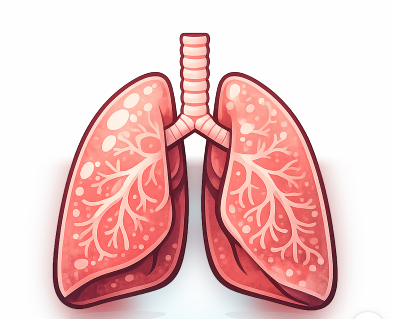
What LDL and HDL actually do
Cholesterol is hydrophobic; it cannot circulate freely in blood.
It is transported via lipoproteins.
Lipoproteins are transport vehicles.
Cholesterol and fats can’t travel on their own in the bloodstream because blood is water-based and fat isn’t.
So your body packages fats into lipoproteins — tiny particles made of fat + protein — to move them around safely.
Think of lipoproteins as delivery and recycling trucks, not the cargo itself.
LDL: the delivery system
Low-density lipoprotein (LDL):
Transports cholesterol from the liver to peripheral tissues
Supplies cholesterol for:
Cell membrane integrity
Steroid hormone synthesis
Tissue repair and regeneration
LDL is not “bad”. It is essential.
LDL’s physiological role as a cholesterol delivery particle is fundamental to human biology (Goldstein and Brown, 2015).
HDL: the clean-up and recycling system
High-density lipoprotein (HDL):
Collects excess cholesterol from tissues, macrophages, and vessel walls
Returns it to the liver for reuse or excretion
This process is known as reverse cholesterol transport, and it underpins HDL’s protective role (Rosenson, Brewer and Ansell, 2016; Tall and Rader, 2018).
Crucially, HDL’s benefit depends on function, not simply concentration.
What the evidence actually shows
When the physiology is considered, the evidence consistently demonstrates the following:
Approximately 75–80% of circulating cholesterol is synthesised endogenously, with dietary cholesterol contributing minimally in most individuals (Dietschy and Turley, 2002; Goldstein and Brown, 2015).
Dietary cholesterol and saturated fat are not physiologically equivalent; saturated fat affects LDL levels via LDL receptor regulation and clearance, not ingestion of cholesterol itself (Hu, Manson and Willett, 2017).
LDL is a necessary transport particle, supplying cholesterol for membrane integrity, hormone synthesis, and tissue repair. Pathology arises from impaired clearance and prolonged circulation, not LDL presence alone (Goldstein and Brown, 2015).
HDL’s protective role is functional, driven by reverse cholesterol transport and cholesterol efflux capacity. HDL-C concentration alone is an unreliable indicator of HDL performance (Rosenson, Brewer and Ansell, 2016).
Regular physical activity improves HDL functionality and lipoprotein turnover, often without major changes in HDL-C levels (Kraus et al., 2002; Rocco et al., 2018; Lavie et al., 2019).
Insulin resistance is a primary driver of dyslipidaemia, impairing LDL clearance and increasing atherogenic particle burden (Reaven, 2011; Vergès, 2015).
LDL particle number (ApoB) more accurately reflects cardiovascular risk than LDL-C alone, particularly in metabolically compromised individuals (Sniderman et al., 2019; Ference et al., 2017).
Dietary fat substitution may modestly influence lipid markers, but movement, muscle activity, and insulin sensitivity exert larger and more durable effects on cholesterol handling and cardiovascular risk (Lavie et al., 2019).
So where does saturated fat fit in?
Saturated fat does not “add cholesterol”.
It influences LDL receptor activity, altering how efficiently LDL particles are cleared from circulation (Goldstein and Brown, 2015).
In some individuals, higher saturated fat intake can:
Reduce LDL receptor expression
Slow LDL clearance
Increase circulating LDL concentration
However, these responses are highly context-dependent, varying with insulin sensitivity, inflammatory status, and genetic background (Hu, Manson and Willett, 2017).
Why butter is the wrong villain
LDL becomes problematic not because butter exists, but because metabolic conditions alter LDL behaviour.
LDL-related pathology emerges when particles:
Remain in circulation longer
Become oxidised or glycated
Interact with inflamed vascular endothelium
These processes are strongly associated with insulin resistance, chronic inflammation, and sedentary behaviour, not with butter consumption in isolation (Reaven, 2011; Vergès, 2015).
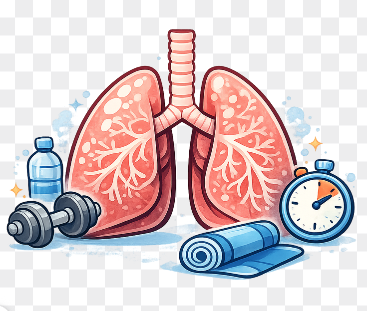
Why exercise beats diet at improving cholesterol health
Diet primarily alters inputs.
Exercise alters system function.
Regular physical activity:
Improves HDL-mediated cholesterol efflux
Enhances lipoprotein turnover
Improves endothelial function
Reduces inflammation
Importantly, these benefits often occur without dramatic changes in LDL-C or HDL-C values (Kraus et al., 2002; Lavie et al., 2019).
Muscle: the cholesterol regulator no one talks about
Skeletal muscle is:
The largest glucose disposal tissue
A major lipid-using organ
A powerful regulator of insulin sensitivity
When muscle is active:
Insulin sensitivity improves
Triglycerides fall
LDL clearance increases
HDL recycling improves
You don’t “burn cholesterol”.
You create demand for lipid transport, restoring balance to the system.
The problem with spread-based advice
The ABC article frames health as a swap problem:
Butter → margarine → nut spreads = better cholesterol
But swaps only matter when the metabolic system is already impaired.
Replacing butter while remaining sedentary:
Misses the primary driver
Creates a false sense of control
Obsessing over spreads while ignoring movement is metabolic misdirection.
Butter isn’t magic. It isn’t poison.
Butter is:
Minimally processed
Energy-dense
High in saturated fat
Metabolically neutral in active, insulin-sensitive individuals
For some people, excessive butter intake may raise LDL — not because butter is inherently harmful, but because cholesterol handling is already impaired.
The real takeaway
Butter is not the problem — metabolic health is
Butter isn’t magic or poison — cholesterol debates miss the real lever
LDL and HDL are transport systems, not moral categories
Exercise improves cholesterol handling in ways diet alone cannot
Movement, muscle use, and insulin sensitivity matter more than spread choice
If you’re active, metabolically healthy, and not inflamed, butter in moderation is unlikely to be your downfall.
If you’re sedentary, insulin-resistant, and inflamed, no spread swap will save you.
References
Dietschy, J.M. and Turley, S.D. (2002) ‘Control of cholesterol turnover in the mouse’, Journal of Biological Chemistry, 277(6), pp. 3801–3804.
Goldstein, J.L. and Brown, M.S. (2015) ‘A century of cholesterol and coronaries: from plaques to genes to statins’, Cell, 161(1), pp. 161–172.
Hu, F.B., Manson, J.E. and Willett, W.C. (2017) ‘Types of dietary fat and risk of coronary heart disease: a critical review’, Journal of the American College of Cardiology, 70(11), pp. 1428–1444.
Rosenson, R.S., Brewer, H.B. and Ansell, B.J. (2016) ‘HDL functionality and its relevance to atherosclerotic cardiovascular disease’, Nature Reviews Cardiology, 13(1), pp. 48–60.
Tall, A.R. and Rader, D.J. (2018) ‘The trials and tribulations of CETP inhibitors’, Circulation Research, 122(1), pp. 106–112.
Kraus, W.E. et al. (2002) ‘Effects of the amount and intensity of exercise on plasma lipoproteins’, New England Journal of Medicine, 347(19), pp. 1483–1492.
Rocco, D.D.F. et al. (2018) ‘Exercise improves HDL anti-atherogenic properties’, Diabetes & Metabolism Journal, 42(6), pp. 435–447.
Reaven, G.M. (2011) ‘Insulin resistance: the link between obesity and cardiovascular disease’, Medical Clinics of North America, 95(5), pp. 875–892.
Vergès, B. (2015) ‘Pathophysiology of diabetic dyslipidaemia’, Diabetes & Metabolism, 41(5), pp. 353–362.
Sniderman, A.D. et al. (2019) ‘Apolipoprotein B particles and cardiovascular disease: a narrative review’, JAMA Cardiology, 4(12), pp. 1287–1295.
Ference, B.A. et al. (2017) ‘Low-density lipoproteins cause atherosclerotic cardiovascular disease’, European Heart Journal, 38(32), pp. 2459–2472.
Lavie, C.J. et al. (2019) ‘Exercise and the cardiovascular system’, Circulation Research, 124(5), pp. 799–815.