The Biomechanics of Medial Heel Loading: How Gait Mechanics May Influence Baxter’s Nerve Compression
Most cases of heel pain are quickly labelled plantar fasciitis, but that diagnosis doesn’t always tell the full story.
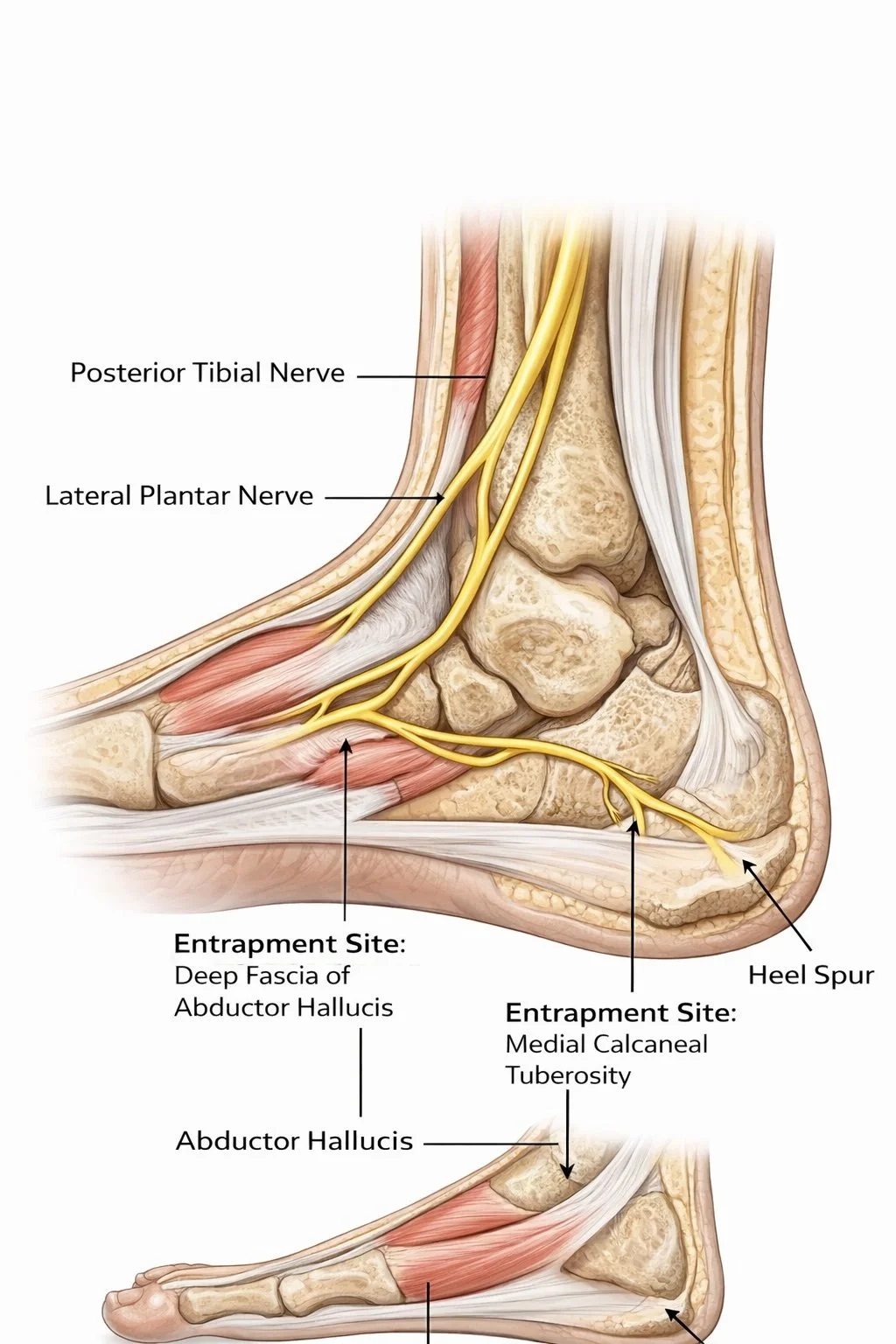
Research suggests that Baxter’s nerve entrapment—compression of the inferior calcaneal nerve—may account for up to 20% of chronic heel pain cases. Because the symptoms overlap with plantar fasciitis, this nerve condition is frequently overlooked.
Understanding how gait mechanics and medial heel loading influence the tissues surrounding Baxter’s nerve can help explain why some heel pain persists despite traditional treatments.
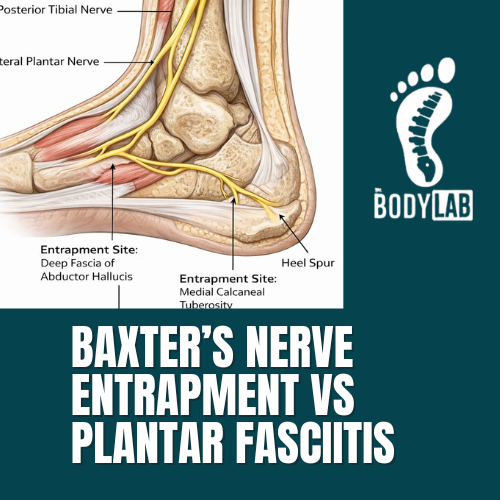
Baxter’s Nerve Entrapment vs Plantar Fasciitis
Most cases of heel pain are quickly labelled plantar fasciitis, but that diagnosis doesn’t always tell the full story.In fact, research suggests that up to 20% of chronic heel pain cases may involve compression of Baxter’s nerve, a small branch of the lateral plantar nerve that runs along the inside of the heel. Because the symptoms overlap, Baxter’s nerve entrapment is frequently mistaken for plantar fasciitis.While plantar fasciitis involves irritation of the plantar fascia, Baxter’s neuropathy is a nerve compression problem, which means the symptoms, mechanics and treatment considerations can be quite different.
Understanding the difference is important. Treatments designed for plantar fascia inflammation may not help nerve-related heel pain—and in some cases may even aggravate the underlying problem.
In this article we explore the key anatomical and biomechanical differences between these two conditions and explain why a deeper look at foot mechanics and gait can be crucial when heel pain persists.
Heel Pain Canberra: Why Your Foot Hurts When You Walk
Heel pain when walking is one of the most common problems I see at The Body Lab in Canberra. Here’s why it happens and how improving foot mechanics can help.
Foot Pain in Canberra
Foot pain is often treated locally, but the real cause may lie in how your foot and ankle manage force during movement. Learn how foot mechanics, tendon loading and gait influence heel pain, plantar fasciitis, posture and movement efficiency.

The Dark Side of Stress: Learned Helplessness, Acetylcholine & the Biology of “Giving Up”
Most people think stress is all adrenaline and action.
But there’s another version — the quiet one. The one where motivation fades, energy drops, and your nervous system stops fighting and starts conserving.
This isn’t weakness. It’s biology.
Research from Martin Seligman and earlier work by Curt Richter showed that when stress becomes uncontrollable, the brain shifts into a shutdown pattern known as learned helplessness.
At a chemical level, this state is linked to altered acetylcholine signaling, increased nitric oxide, reduced thyroid hormone activity, and impaired mitochondrial energy production. In simple terms? Your metabolism and your mood are having the same conversation.
The good news: the nervous system is plastic. Environment, light exposure, movement, social connection, and metabolic support all influence whether the brain adapts toward resilience — or surrender.
Helplessness isn’t a character flaw.
It’s a reversible physiological state.
Rebuilding Injured Tendons: Why Rest Isn’t Enough (and What Actually Works)
Tendon pain doesn’t heal with rest alone. Modern research shows tendons need the right kind of load, at the right time, to recover. This article breaks down what actually works — using the latest evidence from leading tendon researchers — and explains why rehab advice often sounds confusing but isn’t wrong.
Why You’re Not “Fixed” in One Session
I think people are expecting to be fixed in one session and people don’t realise the amount of joints and muscle connections in the lower body and the work needed (strength) and connectiveness (joint sequencing) to actually have a foot or lower limb function in walking.
The lower limb is not a single joint or muscle problem. It is a highly complex, multi-joint system that relies on precise timing, coordination, and load sharing between joints, muscles, tendons, ligaments, and the nervous system (Neumann, 2017; Standring, 2021).
Walking, Foot Pain, and Why Real Change Takes Time
Many people expect foot or knee pain to be “fixed” in one session.
But walking is a whole-body task involving nearly 78 joints, the nervous system, and connective tissue that adapts slowly over time. This article explains why real change takes longer — and why that’s exactly how lasting results happen.
Meet Riccardo Galeotti
Riccardo Galeotti doesn’t treat pain by chasing symptoms — he looks at how your body actually moves. As the founder of The Body Lab Canberra, Riccardo combines biomechanics, gait analysis, movement therapy, and acupuncture to uncover the patterns driving recurring pain. By focusing on how you walk, load, and adapt to gravity, his work helps clients move better, feel stronger, and build long-term resilience — not just short-term relief.

Butter, Cholesterol, and the Wrong Villain
Most cholesterol is made inside your body, not eaten. This article breaks down how LDL and HDL actually work, why saturated fat isn’t the whole story, and why movement, muscle, and metabolic health matter far more than your choice of spread.
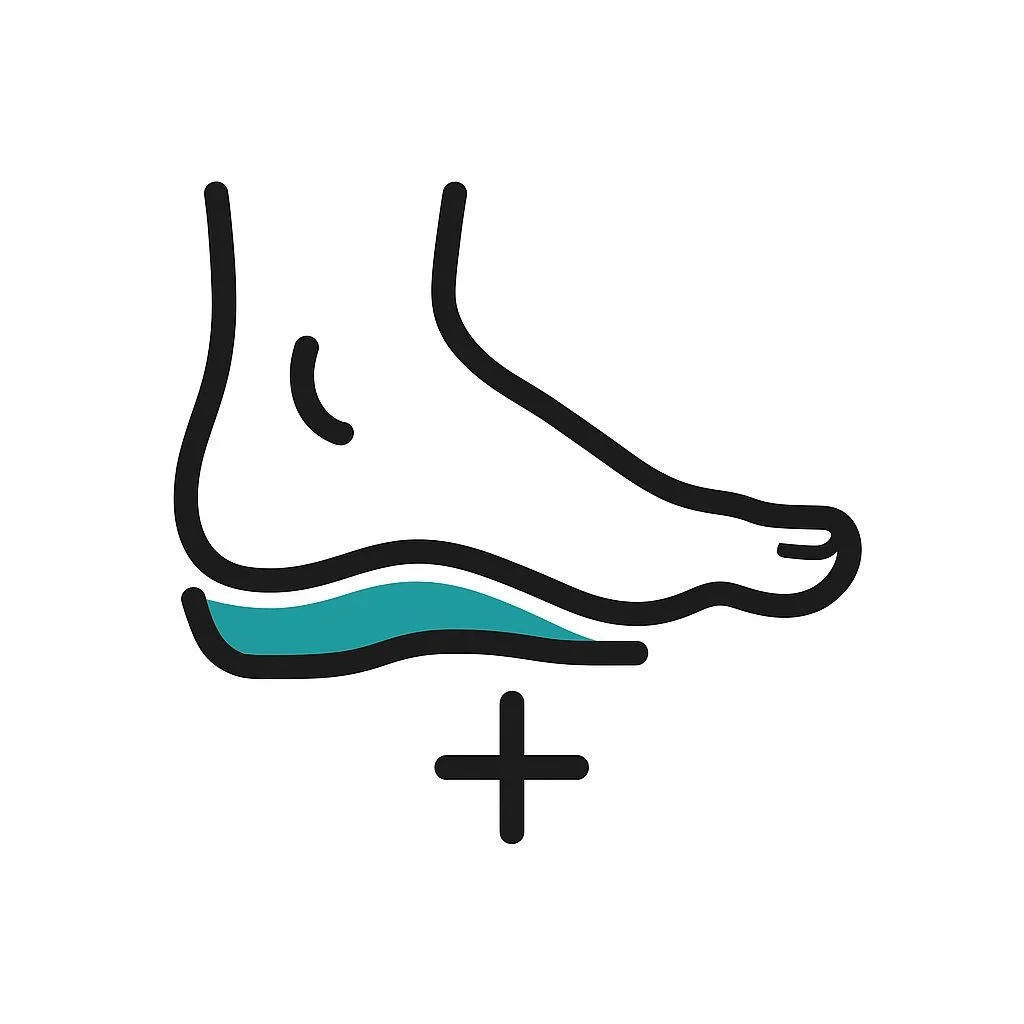
Foot Pain Canberra: Do You Really Need Arch Support — or a Better Plan?
Struggling with foot pain in Canberra? Learn when arch support actually helps, when it doesn’t, and why foot function matters more than arch shape.

Back Pain Canberra: Your Most Asked Questions, Answered (With Zero Fear-Mongering)
Back pain is ridiculously common in Canberra — but that doesn’t mean you should put up with it. In this guide, we break down the real causes of back pain, when you actually need a scan, who to see, and why movement (not bed rest) is your secret weapon. Clear, evidence-based, and written with zero fear-mongering — just the facts, a little sass, and practical steps to start feeling better today.
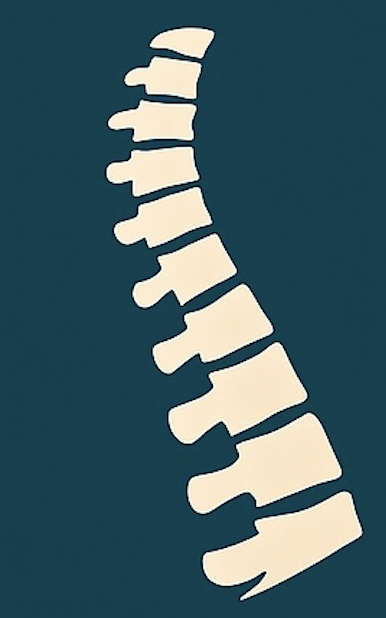
NEUTRAL SPINE: YOUR SECRET WEAPON AGAINST BACK PAIN (CANBERRA EDITION)
“Neutral spine” isn’t stiff posture — it’s your spine’s stress-free, pain-free position. This blog explains what it is, how to find yours, and why it changes everything from walking to lifting. With clear demos, simple cues, and a link to our Core Reset: Spinal Mobility Program, you’ll learn how to move better, breathe better, and feel better.

Can You Correct Years of Bad Posture? (Yes — And Here’s How, Canberra)
Can you really fix years of bad posture? Yes — absolutely. Your body is adaptable at any age, and with the right movement strategy, strengthening, mobility work and expert posture assessment, long-term improvements are not only possible but surprisingly achievable. Learn how to correct rounded shoulders, forward head posture, pelvic tilt and spine stiffness, and why clients across Canberra come to The Body Lab for posture and movement therapy.
Cranial-Sacral Therapy: Exploring a Typical Treatment Session
Ever wondered what actually happens during a cranial-sacral therapy session? At The Body Lab Canberra, we combine gentle CST with nerve releases and acupuncture — a unique approach you won’t find anywhere else in Canberra. Discover what a session feels like, how it helps headaches, TMJ, anxiety, concussion recovery and that “not quite right” feeling your body hasn’t been able to explain.

Canberra’s Rising Induction Rates: Can Acupuncture Can Help You Prepare Naturally
Induction rates in Canberra are higher than ever — but that doesn’t mean you’re out of options. This guide explores why births are being induced more often, what it means for your labour, and how acupuncture can naturally support cervical ripening, reduce stress, and help your body prepare for birth on its own timeline.

Shin Splints: Can You Avoid Them When Playing Footy, Soccer or League?
Tired of shin splints ruining your game? Discover the real causes behind shin pain and how The Body Lab helps footy, soccer, and league players move better and recover faster.

The Foot’s Secret Superpower: Understanding the Windlass Mechanism
Every step you take depends on a brilliant piece of foot engineering called the Windlass Mechanism. This dynamic system—driven by your plantar fascia and big toe—lets your arch lift, your heel rise, and your body move efficiently. In this deep dive, Riccardo from The Body Lab Canberra explains how it works, what happens when it fails, and how to restore effortless motion through smarter foot mobility exercises and biomechanical insight.

Posture in Canberra: How The Body Lab Does It Differently
Posture correction in Canberra doesn’t mean endless stretching or nagging to “sit up straight.” The Body Lab offers a biomechanics-based, movement-first approach that treats the root cause of neck and back pain through assessment, manual therapy, and posture retraining.

I Have Bunions — What Can I Do That’s Different?
If bunion pain is limiting your movement, The Body Lab Canberra offers a smarter solution. Instead of relying on orthotics or surgery, Riccardo Galeotti uses biomechanics, gait retraining, and hands-on therapy to help you move freely again — from the ground up.