The Surprising Truth About Oxygen, Carbon Dioxide and Why Your Body Might Be Working Against You
Most people think breathing is simple.
You breathe in oxygen.
You breathe out carbon dioxide.
Job done.
Except that isn’t actually how the story works.
In fact, some of the most common breathing advice floating around social media, fitness classes, wellness retreats, and even healthcare settings may be missing a crucial piece of the puzzle.
Take a deep breath.
Now take an even bigger one.
Feel that?
Maybe you feel relaxed.
Maybe you feel dizzy.
Maybe you suddenly became aware that you’ve never really thought about breathing before.
Welcome to the rabbit hole.
Because when it comes to breathing, bigger isn’t always better.
Sometimes the person taking the biggest breath in the room is the one creating the most problems.
The Great Oxygen Obsession
Let’s start with one of the biggest myths in health.
“If some oxygen is good, more oxygen must be better.”
Sounds logical.
Unfortunately, the human body has never been particularly interested in our logic.
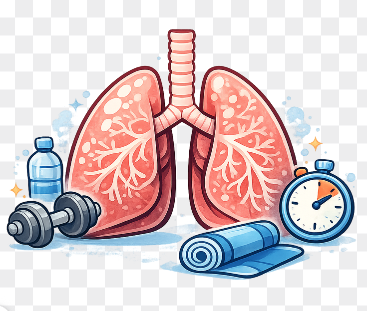
The reality is that healthy blood is already carrying around 97–99% oxygen saturation most of the time.
In other words, your blood is already pretty full.
It’s a bit like trying to cram more people onto a bus that’s already packed.
The problem isn’t necessarily getting oxygen onto the bus.
The problem is getting oxygen off the bus and into the tissues that need it.
This is where things become interesting.
The Gas Everyone Loves to Hate
Carbon dioxide has terrible public relations.
For decades we’ve been taught that carbon dioxide is simply a waste product.
Something to get rid of.
Something undesirable.
The villain in the story.
But physiologically speaking, carbon dioxide is more like the backstage manager of a theatre production.
Nobody notices it until it stops doing its job.
Carbon dioxide helps:
Regulate blood vessel diameter
Control blood pH
Influence nervous system activity
Maintain breathing rhythm
Help oxygen leave the bloodstream and enter tissues
Without adequate carbon dioxide levels, oxygen can become surprisingly reluctant to leave the bloodstream.
This phenomenon is known as the Bohr Effect.
No, it’s not a Harry Potter spell.
It’s one of the fundamental principles of human physiology.
When carbon dioxide levels drop too low, oxygen hangs onto haemoglobin more tightly, making it harder to deliver oxygen where it is actually needed.
You can have plenty of oxygen in your blood and still have reduced oxygen delivery to your tissues.
That sounds backwards.
Because it is.
The body loves paradoxes.
The Problem With “Deep Breathing”
Now before anyone starts throwing yoga mats at me, let’s clarify something.
Using your diaphragm is excellent.
Breathing through your nose is excellent.
Slow breathing is excellent.
What isn’t always excellent is taking huge breaths simply because somebody told you to.
Many people confuse diaphragmatic breathing with large-volume breathing.
They’re not the same thing.
Imagine filling a wine glass.
A little more is good.
A little more again is fine.
Eventually it spills everywhere.
The same principle applies to breathing.
If you consistently breathe more air than your body requires, you can lower carbon dioxide levels below their optimal range.
This process is often called hyperventilation.
The important thing to understand is that hyperventilation doesn’t necessarily mean breathing fast.
You can hyperventilate slowly.
You can hyperventilate quietly.
You can even hyperventilate while thinking you’re doing relaxation exercises.
Hyperventilation simply means breathing more than your metabolic demands require.
Why Stress Changes Everything
Now let’s talk about modern life.
Emails.
Deadlines.
Traffic.
Financial stress.
Children.
News headlines.
Social media.
The human nervous system was designed to occasionally escape a tiger.
Not answer emails while eating lunch and doom-scrolling at the same time.
When stress levels rise, breathing changes.
Shoulders lift.
The chest becomes more active.
The diaphragm often contributes less.
Breathing becomes faster and larger.
Carbon dioxide levels begin to drift downwards.
The body interprets this as a threat.
The nervous system becomes more alert.
Muscles tighten.
Sleep becomes harder.
And suddenly we’re caught in a feedback loop.
The body starts behaving as though danger is present even when we’re simply sitting at a desk.
Your Jaw Might Be Involved Too
This is where breathing becomes far more interesting than simply moving air.
Because breathing isn’t just a lung problem.
It’s a whole-body problem.
Or more accurately, a whole-body opportunity.
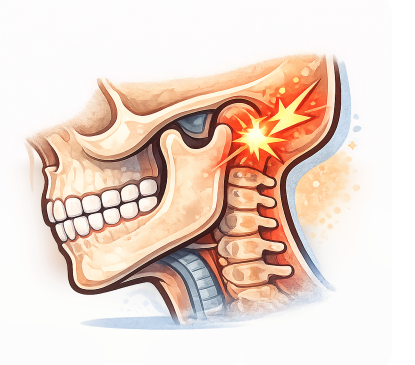
Let’s talk about the jaw.
People often think jaw tension is a jaw problem.
But many people with jaw tension also have:
Neck tension
Headaches
Poor sleep
Mouth breathing
Snoring
Fatigue
Anxiety
Teeth grinding
Coincidence?
Probably not.
The position of the tongue, jaw and airway influences how we breathe.
How we breathe influences our nervous system.
Our nervous system influences muscle tension.
Muscle tension influences posture.
Posture influences breathing.
Round and round we go.
The body doesn’t separate these systems.
Only healthcare professions do.
The Mouth Breathing Problem
Try an experiment.
Walk through a shopping centre.
Observe how many people are breathing through their mouths.
You’ll start noticing it everywhere.
Mouth breathing isn’t always a problem.
If you’re sprinting up a hill, your body has earned the right to use every available airway.
But chronic mouth breathing can create challenges.
Research has linked chronic mouth breathing with:
Sleep-disordered breathing
Altered jaw development
Increased snoring
Dry mouth
Reduced nitric oxide production
Changes in facial growth patterns
This is particularly important in children.
The way a child breathes can influence how their face develops.
Read that again.
Breathing doesn’t just affect health.
It can literally influence anatomy.
Breathing, Sleep and Recovery
One of the biggest shifts occurring in healthcare is the growing recognition that sleep may be the foundation upon which everything else sits.
Poor sleep affects:
Hormones
Pain sensitivity
Immune function
Brain health
Recovery
Weight regulation
Mood
And what sits at the centre of sleep?
Breathing.
Many people spend years chasing symptoms while never investigating how they breathe during the eight hours they spend unconscious.
The result?
Headaches.
Brain fog.
Jaw pain.
Neck pain.
Fatigue.
Reduced recovery.
All while believing they simply need more coffee.
So What Should You Do?
Fortunately, breathing doesn’t need to be complicated.
Most people don’t need another breathing gadget.
Most people don’t need a complicated breathing protocol.
Most people simply need to rediscover efficient breathing.
Start here:
Breathe Through Your Nose
Your nose is not decorative.
It warms air.
Filters air.
Humidifies air.
Produces nitric oxide.
Supports better breathing mechanics.
Use it whenever possible.
Slow Down
The goal isn’t bigger breathing.
The goal is quieter breathing.
Calmer breathing.
More efficient breathing.
Improve Rib Cage Mobility
A stiff rib cage creates breathing problems.
A mobile rib cage creates breathing options.
Movement matters.
Look at the Whole System
Breathing doesn’t exist in isolation.
Consider:
Tongue posture
Jaw position
Neck mobility
Posture
Sleep quality
Stress levels
Walking mechanics
The body is one integrated system.
The Bigger Picture
Perhaps the biggest lesson from modern breathing science is this:
Your body is not trying to get more oxygen.
Your body is trying to get the right amount of oxygen to the right place at the right time.
And sometimes that depends less on how much oxygen you inhale and more on how well you manage carbon dioxide.
It’s one of the great physiological plot twists.
The gas everyone thinks is the bad guy turns out to be one of the heroes.
Breathing well isn’t about becoming obsessed with every breath.
It’s about creating a system where breathing becomes effortless.
Where sleep improves.
Where the jaw relaxes.
Where the neck stops doing all the work.
Where the nervous system feels safe.
And where the body can finally get on with the job it has been trying to do all along:
Keep you alive, moving, recovering, and thriving.
Without needing to take a giant breath every thirty seconds.